

Japan Sunscreen Buying Guide 2026: Where to Buy, What PA++++ Means & Skin-Type Picks
Updated June 2026 · 12 min read
Japan Shop Helper Editorial
Tokyo-based · prices & fees verified on real orders
You land at Narita, it’s 31°C and 80% humidity, and every convenience store window is plastered with SPF50+ sunscreen deals. Japanese sunscreen is genuinely excellent — better, in independent lab testing, than most Western equivalents at any price point. But the drugstore aisle is overwhelming if you don’t know what the labels mean or which store to walk into first.
This guide covers the essentials: why Japanese formulas outperform Western ones, what the PA rating system actually measures, where in Japan to buy sunscreen (and how to save 10%), and which skin-type categories to shop within. For a head-to-head comparison of specific brands — Biore vs Anessa vs Skin Aqua vs Allie vs Kose Suncut — see our Japanese sunscreen brand comparison.
Why Japanese Sunscreen Outperforms Western Formulas
The gap comes down to UV filter regulation. The U.S. FDA last approved a new UV filter ingredient in 1999 — over 26 years ago. Japan’s Ministry of Health, Labour and Welfare (MHLW) has since cleared multiple next-generation chemical filters: Tinosorb S, Tinosorb M, and Uvinul A Plus. These molecules absorb broader UV wavelengths, degrade more slowly in sunlight, and spread more evenly across skin than older avobenzone-based formulas.
Avobenzone — the UVA workhorse in most American sunscreens — breaks down within 60–90 minutes of direct sun exposure unless chemically stabilized. Japanese formulas don’t have that problem. Tinosorb S and Uvinul A Plus are photostable, which means the PA++++ rating you see on a ¥700 Japanese tube holds up through a full day of outdoor use, not just the first hour.
The cosmetic elegance gap is equally significant. Japanese brands invest heavily in what chemists call 使用感 (shiyou-kan) — literally “use feel.” The result: SPF50+/PA++++ products that absorb in under 10 seconds, leave no white cast, and sit invisibly under makeup all day. @cosme, Japan’s largest beauty platform with 19 million users, routinely ranks ¥700 drugstore sunscreens above ¥8,000 luxury imports on wearability scores.
PA Rating System Decoded: What PA++++ Actually Measures
SPF measures UVB protection — the rays that cause sunburn. The PA system measures UVA protection — the rays responsible for wrinkles, dark spots, and deep DNA damage. It’s based on the Persistent Pigment Darkening (PPD) method, which measures how much UVA radiation causes visible skin darkening on test subjects.
| PA Rating | PPD Value | UVA Protection Level | Common Product Type |
|---|---|---|---|
| PA+ | PPD 2–3 | Minimal | Tinted moisturizers |
| PA++ | PPD 4–7 | Moderate | Daily moisturizers with SPF |
| PA+++ | PPD 8–15 | High | Standard sunscreens |
| PA++++ | PPD 16+ | Extremely high | Most Japanese SPF50+ sunscreens |
PA++++ is the highest tier, and it’s standard on Japanese drugstore sunscreens costing ¥600–¥1,200. Most American sunscreens don’t display a PA rating at all. The EU uses a “UVA seal” that requires UVA protection to be at least one-third of the SPF — for SPF50, that equates to roughly PPD 16–17. Japanese PA++++ products routinely exceed that threshold.
Pro Tip
Chemical vs. Physical Filters: Matching the Formula to Your Skin
Japanese sunscreens fall into three categories, and knowing which one suits your skin prevents buyer regret at the checkout counter.
Chemical (Organic) Filters
These absorb UV radiation and convert it to heat. Japan’s advantage is access to Tinosorb S, Tinosorb M, and Uvinul A Plus — photostable molecules covering both UVA and UVB without degrading in sunlight. Most “watery essence” and “gel” sunscreens use chemical filters for their invisible, fast-absorbing texture. Biore, Skin Aqua, and Kose Suncut fall into this category.
These formulas work best for oily, combination, and normal skin. Because they absorb into the top layers of skin, they can occasionally irritate reactive or compromised skin barriers.
Physical (Mineral) Filters
Zinc oxide and titanium dioxide sit on the skin’s surface and physically reflect UV radiation. Gentler for sensitive, eczema-prone, or post-procedure skin. The main trade-off is a visible white cast on medium to deep skin tones. Japanese brands Curel and NOV use nano-scale zinc oxide milling to minimize residue — both are dermatologist-recommended and widely stocked at Matsumoto Kiyoshi and Welcia.
Hybrid Formulas
The best-known hybrid is Anessa Perfect UV Sunscreen Skincare Milk, which combines zinc oxide with modern chemical absorbers. Shiseido’s proprietary Auto Booster technology strengthens the UV-blocking film when it contacts heat or moisture — making it the go-to choice for active outdoor days. The trade-off is a slightly richer texture and higher price point (around ¥2,480 for 60 mL).
Skin-Type Buying Guide: Which Category to Shop
Every product listed below is SPF50+/PA++++ unless otherwise noted, and available at major Japanese drugstores for under ¥2,500.
Oily and Combination Skin
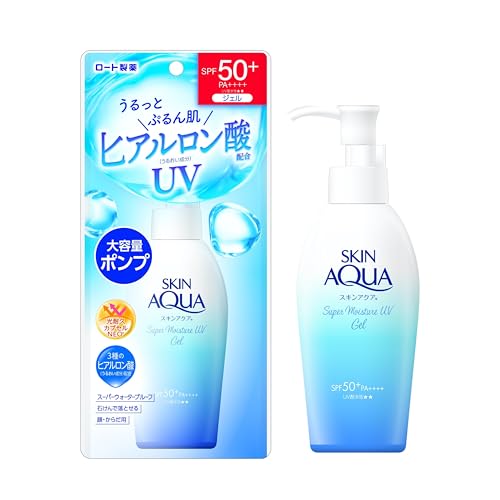
Look for 「ウォータリーエッセンス」(watery essence) or 「ジェル」(gel) on the label. These absorb immediately and dry to a semi-matte finish without pore congestion. Biore UV Aqua Rich Watery Essence is the category benchmark: ¥700 for 70 g, zero white cast, and fast enough to fit into a morning routine under makeup. The Skin Aqua Super Moisture Gel (blue packaging) offers more volume — 140 g for around ¥700 in-store — if you need to cover your neck and arms as well.
Dry Skin
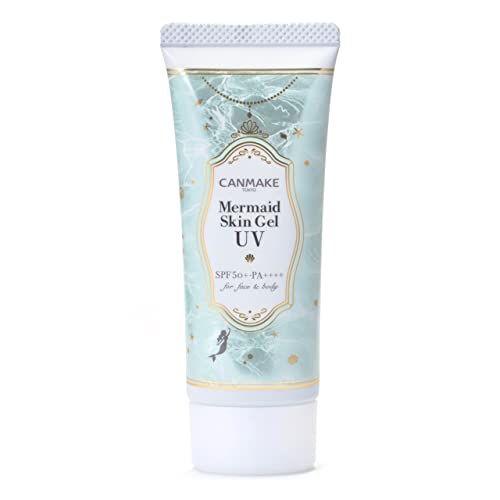
Reach for formulas with 「ヒアルロン酸」(hyaluronic acid) or 「保湿」(moisturizing) on the packaging. Canmake Mermaid Skin Gel UV at ¥770 in-store for 40 g contains hyaluronic acid and dries to a dewy finish that dry skin types appreciate — apply it over a thin moisturizer layer. For those who want richer hydration throughout the day, the Allie Extra UV Gel N (around ¥2,000 in-store for 90 g) adds friction-proof technology that keeps the UV film intact even when touched by glasses frames or mask straps.

Sensitive and Eczema-Prone Skin
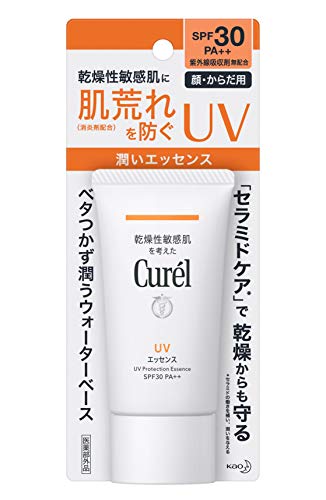
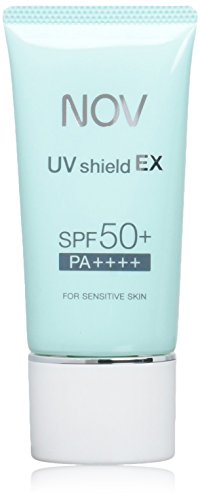
Prioritize mineral or hybrid formulas and look for 「敏感肌用」(for sensitive skin), 「無香料」(fragrance-free), and 「アルコールフリー」(alcohol-free) on the label. Curel UV Protection Essence uses Kao’s ceramide technology and is available at every Matsumoto Kiyoshi and Welcia. For higher SPF with mineral-only filters, the NOV UV Shield EX (SPF50+/PA++++) is a dermatology-clinic staple that holds up well under reapplication.
Heads Up
Active and Outdoor Use
Any day involving swimming, hiking, or extended heat exposure demands a water-resistant formula. Look for 「ウォータープルーフ」(waterproof) on the label. Anessa Perfect UV Sunscreen Skincare Milk is rated for 80 minutes of water immersion — Japan’s highest water-resistance classification. At ¥2,480 for 60 mL, it costs significantly more than a drugstore watery gel, but for genuinely active days, the performance difference is real and measurable.
Makeup Users (One-Step Base)
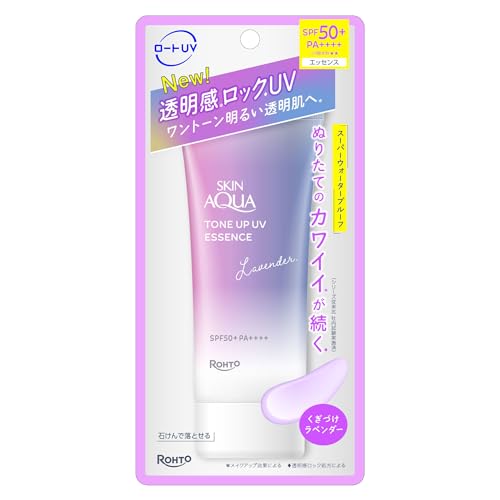
Japan’s tone-up sunscreens function as a sunscreen and color-correcting primer in one step. Skin Aqua Tone Up UV Essence (rose packaging) uses lavender and pink pigments to brighten and even the complexion on fair to medium skin tones. Allie Chrono Beauty Tone Up UV 01 sits at a premium tier (around ¥1,980 for 60 g) with a sheerer tint and serum-like texture. Note: lavender and purple tints can appear ashy on medium to deep skin tones — the non-tinted clear formulas are safer choices for Fitzpatrick IV–VI.
Where to Buy Japanese Sunscreen: Store-by-Store Guide
The three largest drugstore chains are Matsumoto Kiyoshi (マツモトキヨシ), Welcia (ウエルシア), and Sundrug (サンドラッグ). All three have branches within a 5-minute walk of most major train stations in Tokyo, Osaka, and Kyoto. Prices are nearly identical across chains.
Matsumoto Kiyoshi
The most tourist-friendly option. Many flagship locations in Shinjuku, Shibuya, and Osaka’s Shinsaibashi have English-speaking staff and dedicated tax-free counters. Matsumoto Kiyoshi frequently stocks exclusive travel-size bundles near the register during April–September UV season, and carries the broadest sunscreen selection of any chain. The point card (Matsukiyo Loyalty) gives return shoppers 1–5% back.
Don Quijote (Donki)
Open until 3–5 AM at major locations. Donki runs bundle promotions on cosmetics (buy 3, get 10% off) more frequently than the dedicated drugstore chains, making it useful if you’re stocking up on multiple items at once. Selection is narrower than Matsumoto Kiyoshi — you’ll reliably find Biore and Skin Aqua, but less likely to find Allie or Curel.
Amazon Japan
Useful before your trip or for ordering products shipped to your hotel. Prices match or beat in-store for most popular items. Setting up an Amazon Japan account takes under 10 minutes and enables delivery to your hotel address. Reliable for major brands (Biore, Anessa, Skin Aqua, Allie) but verify the seller is Amazon itself or a brand-authorized seller to avoid counterfeits for premium products like Anessa.
Finding the Sunscreen Aisle
Look for 「日焼け止め」(hiyake-dome, “sunburn stopper”) on overhead shelf signs, or follow the “UV” signage in the skincare section. Between May and September, most stores build a dedicated UV display near the entrance stacked with bestsellers — you’ll likely walk past it on your way in. The sunscreen aisle typically sits between face wash and body lotion.
Reading Japanese Sunscreen Labels Without Japanese
Three pieces of information are all you strictly need to evaluate any tube:
- SPF followed by a number — always printed in Western numerals.
- PA followed by plus signs — four is the maximum.
- The ml or g amount — also in Western numerals.
Useful kanji for label scanning: 「敏感肌用」= for sensitive skin • 「ウォータープルーフ」= waterproof • 「石鹸で落とせる」= removable with soap (no oil cleanser required) • 「無香料」= fragrance-free • 「日焼け止め」= sunscreen.
Tax-Free Shopping: How to Save 10% at Japanese Drugstores
All major drugstore chains offer tax-free purchases for foreign tourists on transactions of ¥5,000 or more (pre-tax) in a single store visit. The saving is Japan’s 10% consumption tax — on a ¥5,000 basket, that’s ¥500 back, enough for an extra tube of Biore.
For a full list of items worth stacking into the same tax-free transaction, see our Japan drugstore shopping list.
Travelling With Japanese Sunscreen: Carry-On Rules & Smart Packing
Sunscreen is classified as a liquid under international aviation rules, so the standard 100 mL carry-on limit applies. Here’s how the most popular Japanese sunscreens fit:
| Product | Size | Carry-On? | Notes |
|---|---|---|---|
| Biore UV Aqua Rich Watery Essence | 70 g | Yes | Fits standard liquids bag |
| Canmake Mermaid Skin Gel UV | 40 g | Yes | Compact — ideal for carry-on |
| Anessa Perfect UV Skincare Milk | 60 mL | Yes | Just under the 100 mL limit |
| Skin Aqua Super Moisture Gel | 140 g | No — checked bag only | Buy a 40 g travel size instead |
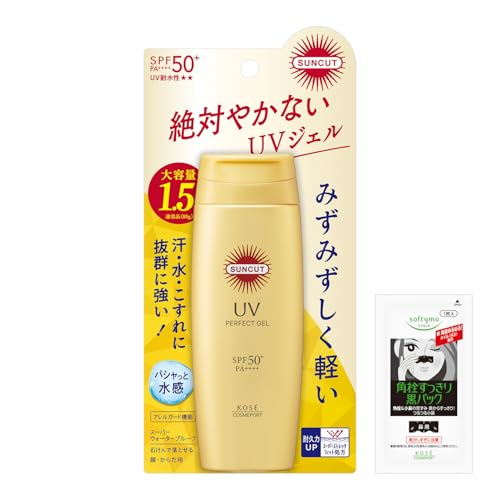
| Kose Suncut UV Perfect Gel | 100 g | No — checked bag only | Matsumoto Kiyoshi stocks a 40 g travel size |
Pro Tip
Price Comparison: Buying in Japan vs. Ordering from Overseas
Using Biore UV Aqua Rich Watery Essence (70 g) as the benchmark:
| Channel | Unit Price | Shipping | Approx. Total |
|---|---|---|---|
| Matsumoto Kiyoshi (Tokyo, standard) | ¥700 (~$4.70) | Free | ~$4.70 |
| Tax-free with passport (¥5,000+ basket) | ¥636 (~$4.25) | Free | ~$4.25 |
| Amazon Japan (ship to hotel) | ¥700 (~$4.70) | Free (Prime) / ¥440 | ~$4.70–$7.50 |
| Amazon US (third-party reseller) | $11–$15 | $0–$5 | $11–$20 |
| Forwarding service (e.g. Buyee) | ¥700 (~$4.70) | $8–$15 (EMS) | ~$13–$20 |
The takeaway: buying in Japan — even without the tax-free discount — is 2–4x cheaper than U.S. third-party resellers for the same product. If you’re shopping before your trip, setting up an Amazon Japan account gives you Japan-price access with delivery to your accommodation.
Related Article
Looking for a brand-by-brand comparison? See our Japanese Sunscreen Comparison → — Biore vs Anessa vs Skin Aqua vs Allie vs Kose Suncut, ranked by texture, finish, and skin type.
Disclosure
This article contains affiliate links. We may earn a commission when you buy through them, at no extra cost to you. Every pick is an honest recommendation.
Shop Japanese beauty products