

Japanese Sunscreen Brand Comparison 2026: Biore vs Anessa vs Skin Aqua vs Allie vs Kose Suncut
Updated June 2026 · 14 min read
Japan Shop Helper Editorial
Tokyo-based · prices & fees verified on real orders
Walk into any Matsumoto Kiyoshi and the sunscreen aisle spans two full shelves with 20+ options. Every tube claims SPF50+/PA++++. So why do they feel completely different on skin — and why does Reddit’s r/AsianBeauty community argue endlessly about which one to buy? Because the UV-blocking performance is genuinely similar across all five major brands. What separates them is texture, finish, water resistance, skin-type fit, and price. That’s exactly what this comparison breaks down.
This page is a direct brand-by-brand breakdown. If you first want to understand the PA rating system, why Japanese sunscreen outperforms many Western formulas, and where to find these products in-store, read our Japan sunscreen buying guide first.
Why Texture Is the Real Differentiator
All five sunscreens reviewed here are SPF50+/PA++++. In independent UV-lab testing by Japanese dermatological researchers, the protection gap between these formulas is negligible — all deliver maximum-grade UVA and UVB blocking at the specified application thickness.
The gap that matters is user compliance: whether you actually reapply because the texture doesn’t irritate you. Japanese cosmetic chemists call this 使用感 (shiyou-kan) — “use feel” — and the industry invests heavily in it. A sunscreen you hate wearing is one that stays in the tube. That’s why this comparison leads with texture and finish, not SPF.
Five-Brand Comparison at a Glance
Here is the side-by-side table across every dimension that matters when choosing at the drugstore shelf. Prices reflect 2026 in-store averages at major chains.
| Brand | Texture | Finish | Price (approx.) | Water Resistance | Best Skin Type | Reddit r/AB Consensus |
|---|---|---|---|---|---|---|
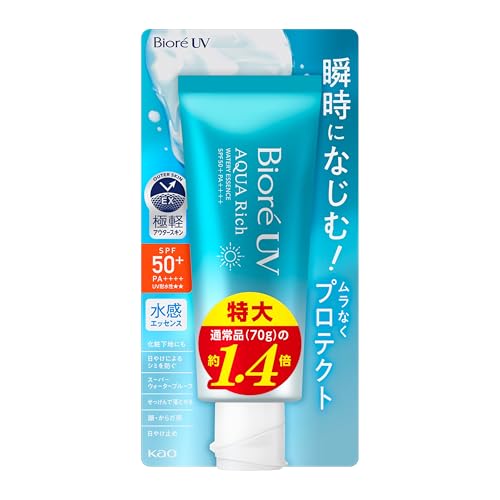
| Biore UV Aqua Rich Watery Essence | Watery gel-essence | Dewy, lightweight | ¥700–¥900 | Moderate (sweat-resistant) | Oily / combo | Crowd favorite, best daily city wear |
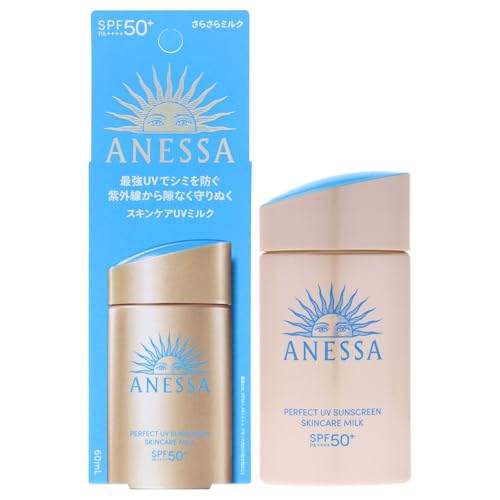
| Anessa Perfect UV Skincare Milk | Milky fluid | Semi-matte, silky | ¥2,400–¥3,300 | Very high (80-min water resistance) | All types, outdoor | "Worth it for beach/hiking days" |
| Skin Aqua Tone Up UV Essence | Tinted essence | Luminous, tone-up | ¥700–¥1,000 | Low-moderate | Fair–medium, city use | "Great BB-primer hybrid, watch the tint on darker skin" |
| Allie Extra UV Gel N | Rich gel | Hydrated, slightly glossy | ¥1,800–¥2,200 | High (friction-proof tech) | Dry skin / glasses wearers | "Underrated — doesn't rub off under mask straps" |
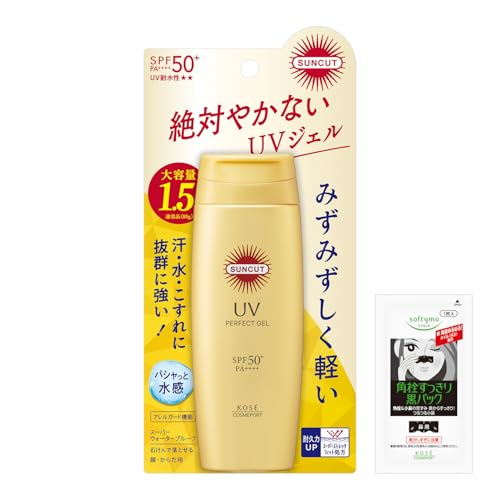
| Kose Suncut UV Perfect Gel | Lightweight gel | Clean, nearly invisible | ¥600–¥800 | Moderate | Normal / combo, body use | "Best volume per yen, underrated for travel" |
1. Biore UV Aqua Rich Watery Essence — The Crowd Favorite
If you’ve seen any Japanese sunscreen recommended on Reddit’s r/AsianBeauty, r/SkincareAddiction, or YouTube, it’s probably this one. The Biore UV Aqua Rich Watery Essence comes in a slim 70 g tube, costs under ¥900, and disappears into skin within 5–8 seconds of application. On oily skin in July Tokyo humidity (routinely 75%+), it keeps midday shine manageable without a heavy matte cast.
The formula uses micro-defense technology that creates a thin UV-blocking veil without pore-clogging oils. It layers seamlessly under foundation or powder. The one real limitation: it is not built for swimming. If you’re heading to Okinawa beaches or doing any outdoor activity involving water, Anessa is the correct pick.
Who Should Skip Biore Aqua Rich
Dry-skin types who need all-day hydration. The watery formula evaporates quickly — which is exactly what oily skin wants, and exactly what dry skin doesn’t. If your skin feels tight by 2 PM in air-conditioned spaces, move to Allie or layer a hydrating serum underneath. Also not the right pick for beach days or extended sweat sessions; the sweat resistance is decent for a city walk but not rated for immersion.
Pro Tip
2. Anessa Perfect UV Sunscreen Skincare Milk — The Outdoor Workhorse
Anessa, made by Shiseido, sits at the premium end of the Japanese drugstore sunscreen spectrum. A 60 mL bottle runs ¥2,400–¥3,300 depending on size and retailer. That price buys something specific: Shiseido’s Auto Booster technology, which strengthens the UV-blocking film when the formula contacts water or heat. In controlled lab conditions, the UV film maintains protection after 80 minutes of full water immersion — Japan’s highest water-resistance classification.
In practice, this translates to a sunscreen you apply at 8 AM before a hike up Mt. Takao, sweat through four hours in 30°C heat, and feel confident is still working. r/AsianBeauty users consistently describe Anessa as “the one you bring for beach days” versus Biore for “everyday Tokyo sightseeing.”
The texture is milky-fluid: shake the bottle, dispense a small amount, and it spreads thin with a semi-matte finish. There is a slight white cast on Fitzpatrick IV–VI skin tones that fades within 1–2 minutes. Applying in thinner layers and building up minimizes this. Oily skin may find the milky base slightly filmy by hour 6 in high-humidity conditions.
Pro Tip
3. Skin Aqua Tone Up UV Essence — The BB-Primer Hybrid
This is the insider pick most Western beauty guides overlook entirely. Skin Aqua’s Tone Up UV Essence (rose-pink tube) contains lavender and pink color-correcting pigments that function as a lightweight BB primer. Japanese beauty enthusiasts on @cosme have been using it as a “one-and-done” base on low-makeup days for years — sunscreen plus skin-evening coverage in a single step, for around ¥800.
On fair-to-medium skin (roughly Fitzpatrick I–III), the pinkish tint adds a luminous, slightly rosy glow that masks redness and gives a “glass skin” appearance. On deeper skin tones, the tint reads slightly ashy. Instagram and X searches for スキンアクアトーンアップ return thousands of before-and-after posts confirming this skin-tone specificity. Test on the back of your hand at the store before committing to the rose version.
Water resistance is low. This is a city sunscreen designed for commuting, shopping, and museum visits — not for Shonan Beach. Reapply every 2–3 hours in hot weather. The 80 g tube is generous for the price.

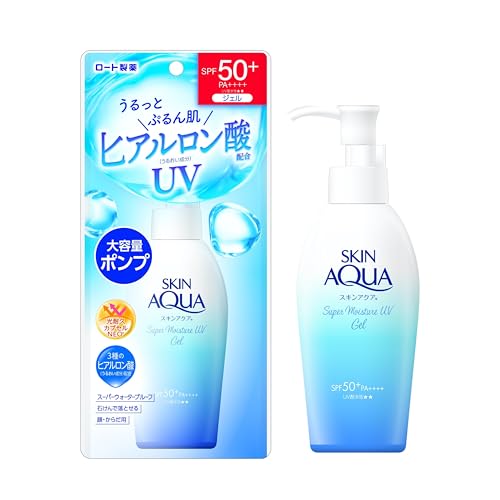
Skin Aqua Super Moisture Gel (Blue Tube): The Clear Alternative
If you like the Skin Aqua brand but don’t want any tint — or have a darker skin tone — the Super Moisture Gel in blue packaging is the answer. Clear formula, no white cast, SPF50+/PA++++, and around ¥700 in-store for 140 g. That volume-per-yen ratio makes it the most economical way to cover face, neck, and arms on a budget trip. The texture is similar to Biore Aqua Rich but slightly more hydrating.
4. Allie Extra UV Gel N — Best for Dry Skin and Friction Resistance
Made by Kanebo, Allie sits at the mid-premium tier: around ¥1,800–¥2,200 for a 90 g tube. Its defining feature is friction-proof technology: the UV film resists mechanical disruption from towels, mask straps, glasses frames, and bag straps better than any other formula on this list. If your sunscreen wears off your nose bridge by lunchtime because of glasses contact, Allie solves that problem specifically.
The gel texture is richer than Biore’s watery essence. It leaves a slightly glossy, hydrated layer that dry-skin types appreciate, particularly in air-conditioned environments. r/AsianBeauty users cite Allie as the “underrated pick” for those who have tried everything and still find sunscreen wiping off their face mid-day. The flip side: oily skin may find it too dewy by hour 4 in summer.
Allie also makes a Beauty Gel UV version with added skincare actives. The Extra UV Gel N is the better choice for raw protection and friction durability — the Beauty Gel trades some film integrity for moisturizing ingredients, and the durability advantage is reduced.

5. Kose Suncut UV Perfect Gel — The Budget Body-and-Face Workhorse
At ¥600–¥800 for a 100 g tube, Kose Suncut offers the best milliliter-per-yen ratio on this list. The lightweight gel spreads fast over large areas and comes in a large enough tube to cover face, arms, legs, and neck without rationing. For a two-week Japan trip with daily outdoor exposure, a single 100 g tube typically covers face-and-body use for 10–14 days.
The finish is clean and nearly invisible — no white cast, no discernible tint. It contains alcohol, which enables the quick-dry feel but can sting on freshly shaved skin or eczema-prone areas. If you have sensitive skin, patch-test on your inner arm first. r/AsianBeauty travelers consistently rate Kose Suncut as the best “airport backup purchase” when nothing else is in stock.
Kose Suncut will not win on water resistance or anti-friction technology. But its price means you can apply generously and reapply without hesitation — from a UV-protection standpoint, applying liberally matters more than having an elite formula applied too thinly.
How to Choose: Match the Formula to Your Itinerary
Rather than picking one “best” sunscreen, experienced Japan travelers buy two: a lightweight daily formula for urban sightseeing and a water-resistant option for outdoor days. Biore + Anessa is the most common combination, totalling under ¥3,700 — less than one mid-range Tokyo lunch.
City Sightseeing (Tokyo, Kyoto, Osaka)
Biore UV Aqua Rich or Skin Aqua Tone Up are the right tools. You’ll move between air-conditioned interiors and outdoor streets repeatedly, walk 15,000–25,000 steps, and likely wear some makeup. Both absorb fast, layer cleanly under cosmetics, and won’t feel heavy during temple visits where you remove shoes and sit on tatami.
Beach and Outdoor Activities (Okinawa, Mt. Fuji, Kamakura)
Anessa is the only correct pick here. Its Auto Booster water resistance actually performs in surf, sand, and sustained sweat. Apply 15 minutes before exposure, reapply after swimming, and you’ll achieve measurably better protection than any watery gel in high-UV outdoor conditions.
Winter and Dry-Climate Travel (Hokkaido, Alpine Regions)
UV exposure increases by 10–12% for every 1,000 m of elevation gain. Cold, dry air strips skin’s moisture barrier, which makes applying rich formulas preferable. Allie Extra UV Gel N handles this scenario: friction-resistant enough for scarf and goggle contact, and hydrating enough for sub-zero wind conditions.
Biore vs Anessa: The Most-Searched Comparison, Settled
This is the comparison r/AsianBeauty has debated since at least 2019, and the answer has not changed: they are designed for different use cases, and both answers are correct depending on your day.
Biore UV Aqua Rich costs about 70% less, feels lighter on skin, and performs better as an everyday urban sunscreen under makeup. It does not have the water resistance to hold up in surf or sustained sweat. Anessa costs more because it is engineered specifically for extreme conditions — ocean swimming, 6-hour hikes, and tropical humidity. You are paying for the Auto Booster film chemistry, not for better UV numbers (which are identical).
For a 10-day trip to Tokyo and Kyoto visiting temples and galleries, Biore handles 9 of those days perfectly. If one day involves Enoshima beach or a coastal hike, bring Anessa for that day. Oily skin types should know that Anessa’s milky base can feel slightly filmy on a sebum-prone forehead by hour 6; for those skin types, Biore wins the daily-wear test even more decisively. Dry skin types may prefer Anessa’s richer base as a lightweight moisturizing layer — an advantage Biore’s fast-evaporating formula cannot match.
What Japanese Locals Actually Buy (and Why)
@cosme, Japan’s largest beauty review platform with over 19 million registered users, consistently ranks Skin Aqua and Biore above Anessa in overall sunscreen ratings. The reason is pure economics: Japanese consumers who wear sunscreen 365 days a year optimize for price-per-application. Anessa’s performance is acknowledged and respected, but at 3x the cost, it is reserved for beach trips and outdoor events rather than the weekday commute.
The Skin Aqua Tone Up Rose variant has a cult following among Japanese women in their 20s and 30s who use it as a solo base on casual days. The BB-primer-sunscreen hybrid concept barely exists in Western markets, which is part of why tourists expect Anessa to be the local favorite when it isn’t.
Japanese men, particularly in the 20–40 age range, are high adopters of daily sunscreen — industry surveys estimate around 40% use it regularly, far above Western equivalents. The most popular choices are Kose Suncut and Biore, specifically because the packaging is gender-neutral and the formulas are fragrance-free in their unscented versions.
Application Tips That Actually Affect Protection
Japanese dermatological guidelines specify 2 mg per cm² of skin for full SPF50+ protection — roughly a ¥500-coin-sized amount for face and neck combined, or about 0.8 mL. Most people apply half that quantity, which drops effective protection to approximately SPF25.
Heads Up
Frequently Asked Questions
Which sunscreen if I can only pick one?
For a mixed itinerary of city sightseeing with the occasional outdoor day, Biore UV Aqua Rich is the safest single pick. It is affordable enough to apply generously, light enough for all-day wear under makeup, and effective at SPF50+/PA++++. If you know your trip skews outdoor and active, swap the default to Anessa. If you have dry skin, default to Allie.
Do Japanese sunscreens work on darker skin tones?
Biore Aqua Rich and Kose Suncut leave virtually no white cast on any skin tone. Anessa has a slight cast on Fitzpatrick V–VI that fades in 1–2 minutes with thin application. Skin Aqua Tone Up Rose has a visible pink tint that appears unnatural on deeper tones — the non-tinted Skin Aqua Super Moisture Gel (blue tube) is the better option for medium to deep skin.
Is Skin Aqua Tone Up actually a substitute for makeup primer?
For light-coverage days on fair-to-medium skin, yes. It provides a luminous base, evens out redness and sallowness, and gives foundation something to grip. It will not cover acne scarring or pronounced hyperpigmentation the way a full-coverage BB cream would. For a “polished but minimal” look at a hotel breakfast or a casual shopping day, it works solo.
How does the PA++++ rating compare to US or European standards?
PA++++ means the product blocks more than 16x the UVA radiation your unprotected skin would absorb (PPD 16+). European PPD ratings align closely: PA++++ roughly equals PPD 16+. The U.S. uses Broad Spectrum labeling without the same granularity — a U.S. “Broad Spectrum SPF50” label guarantees UVA protection equivalent to roughly one-third of the SPF (PPD ~16), which means it is comparable to PA++++. All five sunscreens reviewed here exceed the minimum threshold.
Is Anessa worth the price versus Biore?
Only for the specific use case it is engineered for: water immersion, sustained outdoor sweat, and high-friction activity. For daily city tourism, the UV performance advantage over Biore is negligible, and the cost difference is not justified. Buy Biore for 90% of your days and Anessa for the beach or hiking days. Combined cost is under ¥3,700.
Related Article
Not sure where to buy, or need the PA++++/SPF explainer? Read our Japan Sunscreen Buying Guide → — where to buy, tax-free tips, skin-type picks, and carry-on sizing.
Disclosure
This article contains affiliate links. We may earn a commission when you buy through them, at no extra cost to you. Every pick is an honest recommendation.
Shop Japanese beauty products